
Fast Decision-Making:
How to Think Fast,
Decide Faster,
and Win Under Pressure
Most people don't have a decision problem.
They have a speed problem.
They already know what to do.
They just don't do it fast enough.
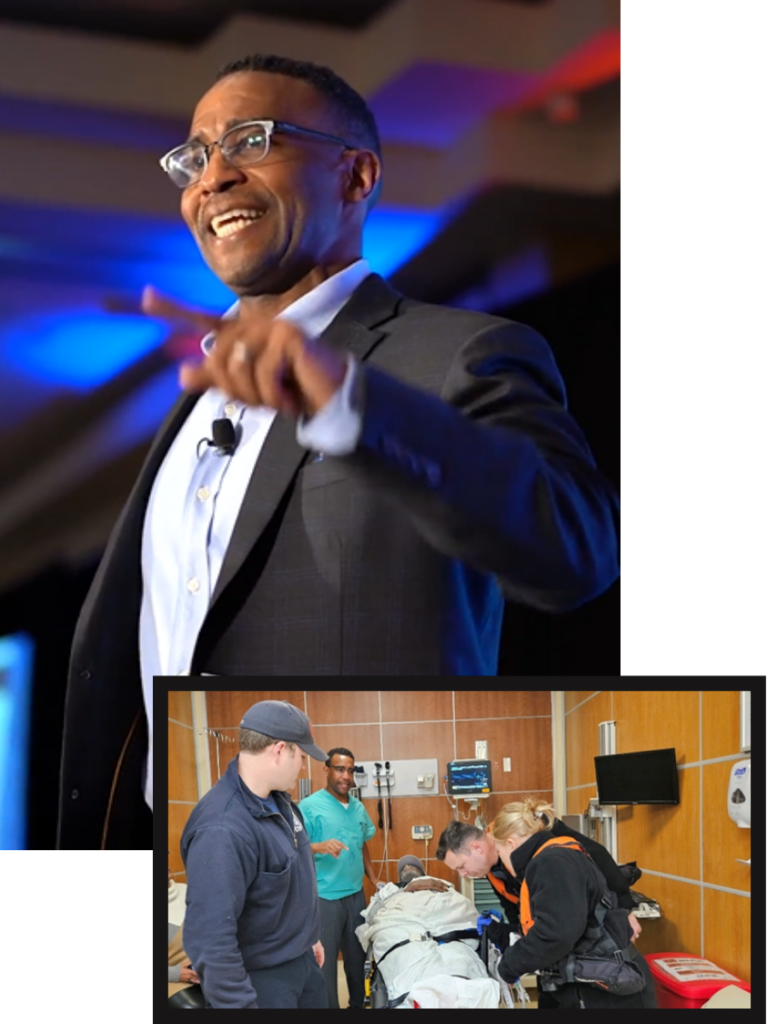
In the emergency room, that delay costs lives.
In business, it costs opportunities, money, and momentum.
Fast decision-making is not about being reckless.
It's about being trained to act before hesitation takes control.
This is where most people fail—and where you separate.

What Is Fast Decision-Making?
Fast decision-making is the ability to make clear, confident choices quickly—even when information is incomplete and time is limited.
It is structured speed. It is the ability to process what matters, ignore what doesn't, and act before hesitation takes control.
"Speed does not eliminate mistakes. It eliminates stagnation."
It is NOT:
- Rushing
- Guessing
- Acting without thinking
It IS:
- Structured speed
- Processing what matters, ignoring what doesn't
- Acting before hesitation takes control
Why Fast Decision-Making
Determines Success
The speed of your decisions determines the speed of your life.
Fast decision-makers do not have better lives by accident. They move faster—and that changes everything. This is inseparable from decision confidence and performing under high pressure situations.
When you decide quickly:
- You capture opportunities
- You maintain control
- You move ahead of others
When you delay:
- Options disappear
- Competitors move first
- Momentum is lost
The longer you wait, the fewer options you have. This applies to: business decisions, leadership decisions, career decisions, and personal life decisions.
Benefits of Fast Decision-Making
Fast decision-making is not just about speed—it creates measurable advantages:
Faster Execution and Results
Speed of decision equals speed of progress. Fast movers produce faster results.
Increased Confidence Under Pressure
Confidence builds decision by decision. High-stakes moments become manageable with practice.
Reduced Stress and Mental Fatigue
Overthinking drains energy. Trained speed preserves mental bandwidth for what matters most.
Stronger Leadership Presence
Teams trust decisive leaders. Clarity under pressure is the mark of true leadership.
More Opportunities Captured
Opportunities have expiration dates. Fast movers capture what hesitators miss entirely.
Momentum Maintained
Each decisive action compounds into forward movement that is impossible to stop.
Why Most People Overthink and Delay Decisions
Most people are not trained to decide. They are trained to hesitate.
"Overthinking is not intelligence. It is untrained decision-making."
Fear of Being Wrong
Fear creates delay. Delay creates missed opportunities.
Waiting for Perfect Information
Perfect information does not exist—especially in high-stakes situations.
Overvaluing Other People's Opinions
Too many inputs slow clarity.
Lack of Decision Training
No one teaches people how to decide—so they default to hesitation.
What the Emergency Room
Teaches About Fast Decisions

In the emergency room, there is no time to overthink. A patient arrives. The situation is unclear. The clock is already running. You do not have all the information. You never do. But you must act.
"Because in that moment, waiting is not neutral—it is dangerous. The decision is made. Action is taken. Adjustments follow. That is how lives are saved."
You may not be in an emergency room. But your delays still cost you:
Waiting feels safe. But it is often the most expensive decision you make.
A Simple Framework for Fast Decision-Making
Fast decision-making is not random. It is trained. Use this framework:
Speed does not eliminate mistakes. It eliminates stagnation.
Book Dr. GeoffreyIdentify the Decision
Be clear on what needs to be decided.
Define the Risk of NOT Deciding
What happens if you delay? What does it cost you?
Use the 10-Second Rule
When hesitation appears, act before it takes control.
Act Decisively
Commit to the decision. Move forward.
Adjust as Needed
Decisions are not permanent. Progress beats perfection.
The 10-Second Rule:
How to Eliminate Hesitation Instantly
Hesitation has a window. Once it opens, fear begins to take control.
The 10-Second Rule is simple: when you feel hesitation, you have 10 seconds to act.
The longer you wait, the harder it becomes. Fast decision-makers act early—before doubt grows.
How to Make Decisions Quickly in Real Life
Fast decision-making applies everywhere. The environment changes—but the principle stays the same: act before hesitation expands.
Move on Opportunities
Move quickly on opportunities. Delay kills deals.
Create Clarity
Your team looks for clarity. Slow decisions create confusion.
Stop Complicating It
The longer you wait, the more complicated simple decisions become.
How to Improve Your Decision-Making Skills
Decision-making is a skill—and it can be trained.
To improve:
- Make small decisions faster every day
- Limit unnecessary inputs
- Set time limits for decisions
- Practice acting with incomplete information
- Review decisions to learn and improve
"You do not become confident by waiting. You become confident by deciding."

Confidence Is Built, Not Born
Mistakes That Slow You Down
Avoid these common traps:
Overthinking Simple Decisions
Not every decision requires deep analysis. Overthinking simple choices drains the energy you need for high-stakes moments.
Seeking Excessive Validation
Too many opinions slow clarity. Constant validation-seeking signals a lack of self-trust and stalls momentum.
Confusing Speed with Recklessness
Fast decisions are structured—not reckless. Speed is the product of training, not impulse.
Failing to Learn from Past Decisions
Every decision is data. Ignoring feedback means repeating costly mistakes.
The goal is not perfection. The goal is consistent, forward movement.
How to Train Yourself to Make Faster Decisions
Speed is built through repetition. Train it daily:
"Confidence is not something you wait for. It is something you build—decision by decision."
Make Low-Risk Decisions Quickly
Build the habit daily on small choices to develop decision speed at scale.
Set Deadlines for Decisions
Hard time limits force clarity and eliminate delay loops that drain momentum.
Reflect on Outcomes
Review every decision. What worked, what didn't. Feedback accelerates mastery.
Build a Habit of Action
Action is a muscle. The more you flex it, the stronger and faster it becomes.
Get the Free Decision Making Playbook
A 1-page framework you can apply today
Frequently Asked Questions About Fast Decision-Making
Common questions, answered directly.
Set time limits, reduce unnecessary input, and practice acting quickly in low-risk situations.
Not when structured. Fast decisions allow for adjustment. Delayed decisions often eliminate options.
Yes. Like any skill, it improves with repetition, structure, and feedback.
Overthinking is usually driven by fear, lack of training, or waiting for perfect information.
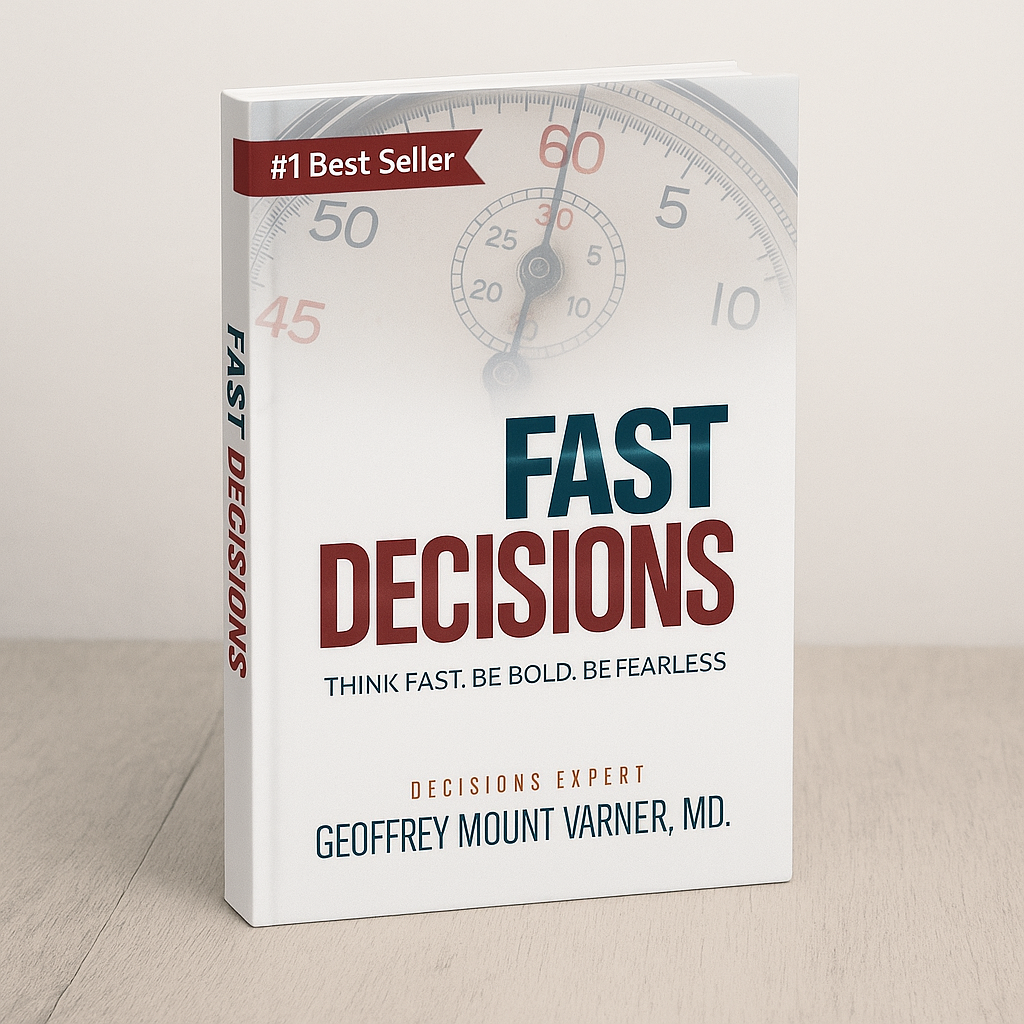 By Dr. Geoffrey
Fast Decisions
The definitive guide to thinking fast and deciding faster. Drawing on 40+ years of ER experience, Dr. Geoffrey breaks down the exact system that lets you act decisively when it matters most — in business, leadership, and life.
Get the BookReady to Make Faster,
Better Decisions?
You already know what to do. You're just waiting too long to do it.
If you're ready to:
- Stop overthinking
- Act with confidence
- Move faster in high-stakes moments