
Decision-Making
Under Pressure:
How to Stay Clear,
Act Fast, and Lead
When It Counts
Pressure doesn't create who you are.
It reveals it.
When the stakes are high…
When time is limited…
When the outcome matters…
Most people hesitate.
Not because they don't know what to do—
but because pressure changes how they think.
In the emergency room, pressure is constant.
There is no pause button. No perfect information. No extra time.
You decide—or the situation decides for you.
The same is true in business, leadership, and life.
Can you think clearly when it matters most?

What Is Decision-Making Under Pressure?
Decision-making under pressure is the ability to make clear, effective choices quickly in high-stakes situations where time is limited and information is incomplete.
It is not about staying perfectly calm. It is about staying functional when others freeze. It is the difference between reacting emotionally and responding decisively.
It is NOT:
- Staying perfectly calm
- Reacting emotionally
- Freezing when stakes are high
It IS:
- Staying functional when others freeze
- Responding decisively under stress
- Making clear choices with incomplete information
Benefits of Decision-Making Under Pressure
When you improve your ability to decide under pressure, you gain:
Faster Responses in Critical Moments
Speed of response equals speed of control. Trained decision-makers act while others are still processing.
Increased Leadership Trust and Credibility
People follow those who stay clear when pressure rises. Decisiveness earns lasting trust.
Reduced Hesitation and Second-Guessing
Training eliminates the hesitation loop. You act with conviction instead of waiting for certainty.
Better Outcomes in High-Stakes Situations
Structured pressure response consistently produces better results than reactive or delayed decisions.
Stronger Mental Resilience
Each decision under pressure builds the mental capacity to handle the next one even better.
Performance When It Counts
Pressure performers are trained—not lucky. Preparation is what separates those who deliver from those who don't.
Why Decision-Making Under Pressure Matters
Your highest-stakes moments define your outcomes.
Pressure compresses time and amplifies consequences. Leaders are not judged when things are easy. They are judged when the stakes are high, the outcome matters, and the clock is running. When pressure rises, your training shows.
In those moments:
- There is no time to overanalyze
- There is no guarantee of certainty
- There is no opportunity to delay
Leaders are judged when:
- The stakes are high
- The outcome matters
- The clock is running
What Happens to the Brain Under Pressure
Pressure changes how you think.
When stress increases, your brain shifts into survival mode. Emotional responses override logic. Decision speed slows or becomes inconsistent.
"The issue is not intelligence. The issue is untrained response to pressure."
When stress increases:
- Your brain shifts into survival mode
- Emotional responses override logic
- Decision speed slows or becomes inconsistent
This is why people:
- Freeze
- Panic
- Make poor decisions
Why Most People Fail Under Pressure
Most people are not trained to make decisions under pressure. They rely on time they do not have, information they will never get, and certainty that does not exist.
They Freeze
Because pressure overwhelms their thinking.
They Delay
Because they want more information.
They Overreact
Because emotion takes control.
They Second-Guess
Because they do not trust their decisions.
Pressure exposes the gap between knowledge and execution. Without decision confidence, hesitation increases.
What the Emergency Room
Teaches About Pressure

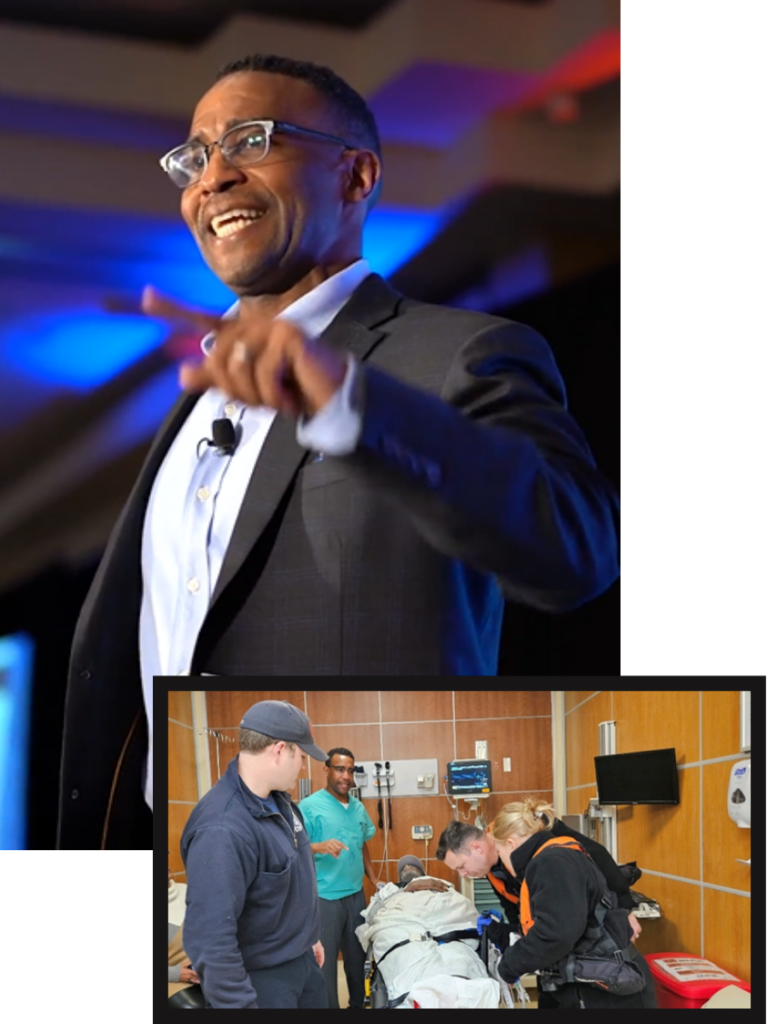
In the emergency room, pressure is constant—and unforgiving. A patient arrives in critical condition. There is no complete history. No time to gather every detail. No room for hesitation. The decision must be made now. Not perfectly. Not comfortably. But decisively.
"You act based on what you know, what you see, what matters most. Then you adjust in real time. That is how lives are saved."
You may not be in an emergency room. But your decisions still carry weight:
How to Make Decisions Under Pressure
When pressure is high, simplify your approach.
Under pressure, clarity beats complexity. This connects directly to fast decision-making, where speed becomes your advantage.
Book Dr. GeoffreyControl the Environment
Slow your breathing. Stabilize your focus.
Identify What Matters Most
Not everything matters equally. Prioritize.
Eliminate Irrelevant Noise
Ignore inputs that do not impact the outcome.
Decide with Available Information
You will never have everything. Decide anyway.
Act and Adjust
Action creates clarity. Adjustment creates precision.
The 10-Second Rule Under Pressure
Pressure amplifies hesitation. The moment hesitation appears, the clock starts.
When it happens, you have seconds—not minutes—to act.
Act before fear expands. Because once hesitation grows, it becomes harder to move.
Fast action is not reckless. It is controlled urgency.
How to Stay Calm and Think Clearly Under Pressure
Calm is not automatic. It is trained.
"You do not need to eliminate pressure. You need to perform within it."
Focus on One Decision at a Time
Narrowing focus prevents overwhelm and creates the clarity needed to act.
Control Your Breathing
Breath is the fastest tool for resetting the nervous system under stress.
Reduce Unnecessary Inputs
Too much incoming information creates noise. Eliminate what doesn't affect the outcome.
Trust Your Training and Stay Anchored in Action
Preparation creates confidence. Action breaks paralysis and creates forward momentum.
Real-World Applications of
Decision-Making Under Pressure
Pressure rewards those who act—not those who wait.
Speed and Clarity
Deadlines, negotiations, and opportunities require speed and clarity.
Decide When It's Unclear
Your team depends on your ability to decide when situations are unclear.
Action Creates Direction
Delay increases risk. Action creates direction.
Common Mistakes Under Pressure
The goal is not perfection. The goal is effective execution.
Waiting for Perfect Information
Perfect information does not exist under pressure. Waiting for it is the decision to lose.
Letting Emotion Override Judgment
Emotion is a signal, not a strategy. Trained decision-makers feel pressure and act anyway.
Overcomplicating Decisions
Complexity is the enemy of speed. Simplify the decision to what matters most and move.
Failing to Act Quickly or Adjust After Action
Speed without adjustment is reckless. Adjustment without speed is delay. You need both.
How to Train Decision-Making Under Pressure
You do not rise to the level of your potential. You fall to the level of your training.
"Training creates automatic responses. Automatic responses create speed."
Practice Decisions with Time Constraints
Hard deadlines on decisions build the habit of acting quickly under controlled conditions.
Simulate High-Pressure Environments
You perform how you practice. Recreate pressure to prepare for the real moments.
Reflect on Past Decisions
Every decision is data. Review it. Learn from it. Improve from it.
Build Confidence Through Repetition
Develop structured decision frameworks and build confidence decision by decision.
Get the Free Decision Making Playbook
A 1-page framework you can apply today
Frequently Asked Questions About Decision-Making Under Pressure
Common questions, answered directly.
Focus on what matters most, eliminate distractions, and act with available information.
Because stress overwhelms untrained decision-making processes.
Yes. It is a trainable skill built through repetition and structure.
Yes—but calm is built through preparation, not personality.
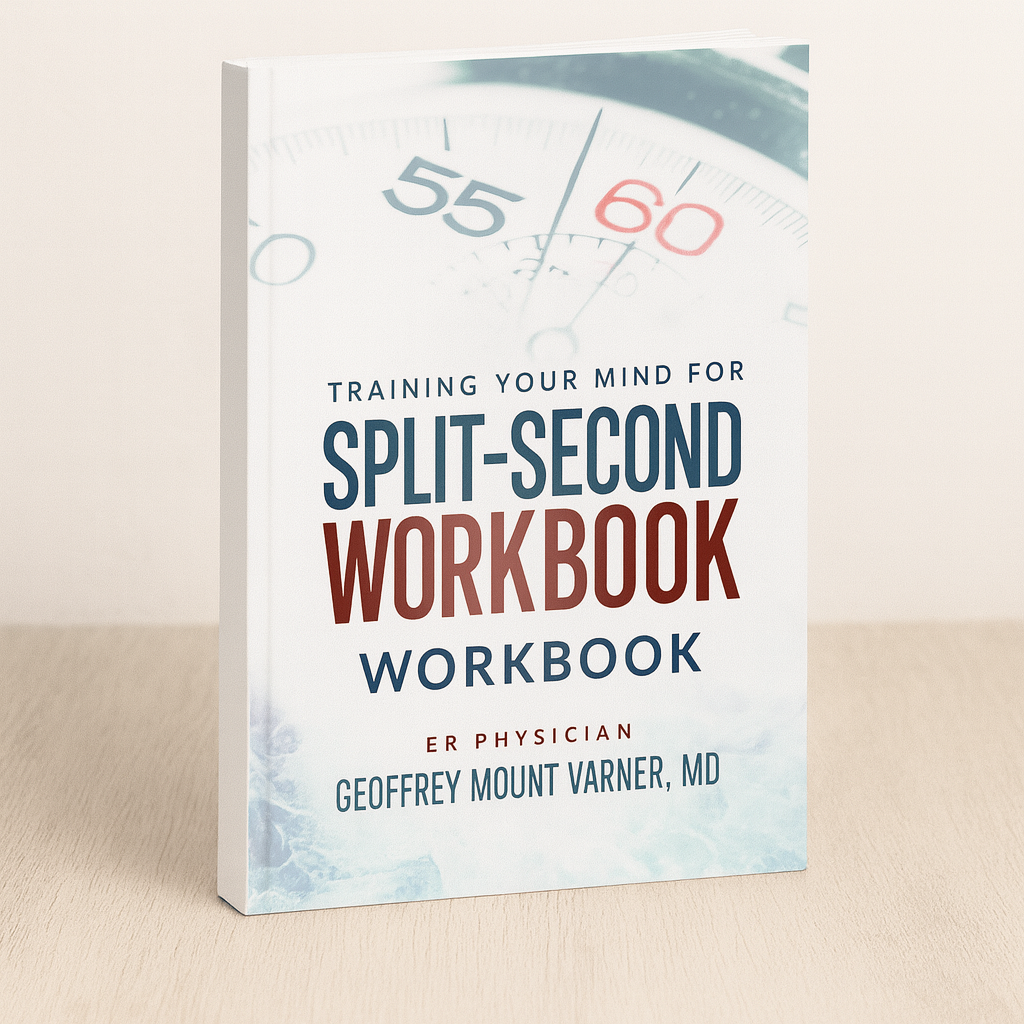 By Dr. Geoffrey
Split Second Decisions
The high-pressure playbook drawn from 40+ years in the emergency room. Learn the exact frameworks Dr. Geoffrey uses to make life-or-death decisions fast — and how you can apply them in business and leadership.
Get the BookReady to Perform
Under Pressure?
Pressure is not the problem. Lack of preparation is.
The stakes will not get lower. The opportunities will not wait. The only question is: will you be ready when it matters?
If you are ready to:
- Think clearly under stress
- Act faster in high-stakes situations
- Lead when others hesitate